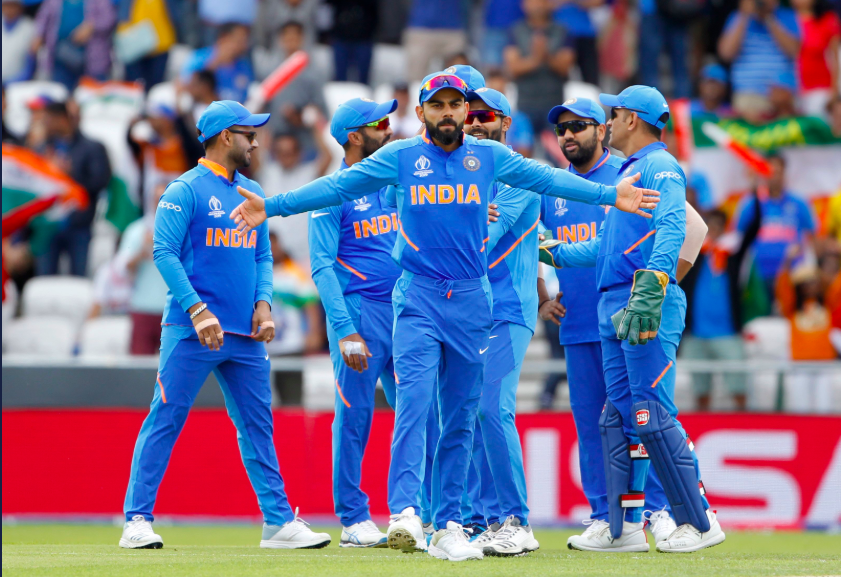
Tigers fall prey to the men in Blue!

Picture tweeted by BCCI

After hitting a stumbling roadblock on the way to the semis and loosing by 31 runs to England, India finally managed to seal their spot in the Semi final.

India won the toss and decided to bat first at the Edgbaston stadium. The pitch was slow and it reminds of the previous match with England but this time India is batting first and the pitch isn’t used. There’s no scorecard pressure on the batsmen for scoring quick runs.

The openers was making their way to the pitch with the the Bangladesh team and the umpires. KL Rahul was replacing the injured Shikhar Dhawan. In the beginning of the World Cup, we have seen that Shikhar Dhawan was the one to take the charges and Rohit Sharma was the consolidator in that phase. After, Dhawan’s injury it was Rohit Sharma who was taking the charge of the innings. India’s power play batting average has been 4.10 which is lower than the average of the other teams (4.93).

The top three Indian Batsmen have been in top form throughout the world cup. Even after the exit of Dhawan, KL Rahul managed to give a good start to the Indian side.

According an analysis by Cricbuzz, the top three managed to score 69% of India’s runs which is the highest among the top three for all teams with Australia’s 58.04% being the next most. At least one of the top three managed to score fifty in each of the eight games they played, with seven of those 15 fifty-plus scores being centuries. The top three cumulatively averaged just shy of 70 in the tournament with a strike rate of 92.87, which is bettered only by England (97.12).

Rohit Sharma from the beginning of the match was targeting the shorter boundaries and it was the 14.2 over that Rohit Sharma judged the short ball early and hit it over the mid-wicket for a six. He scored up another fifty in the world cup. KL Rahul was also quick enough to shift his gear and score a brilliant and well deserved fifty.

Rohit Sharma was instrumental in converting the fifty in to a hundred. But the wicket was getting slower and getting more and more difficult to bat. The middle order batsmen failed to live upto the expectation and India was losing wickets at regular intervals. Kartik who was playing his debut world cup match failed to perform. Dhoni on the other hand, took singles and doubles, keeping the big hits for the end. Once again, like the England match he failed to perform.

The bowlers for India have been absolutely phenomenal throughout the tournament. After, Bhuvneshwar Kumar was injured, it was Shami who took the responsibility on his shoulders and he delivered it well. This match all the three fast bowlers were playing and they deliver it really well. Bumrah was the top wicket taker in the match.

The Bangladesh batting order expect Shakib Al Hasan and Mohammad Saifuddin failed to score runs.

India in the end comfortably managed to get a 28 runs victory, becoming the second team after Australia to qualify for the semifinal.
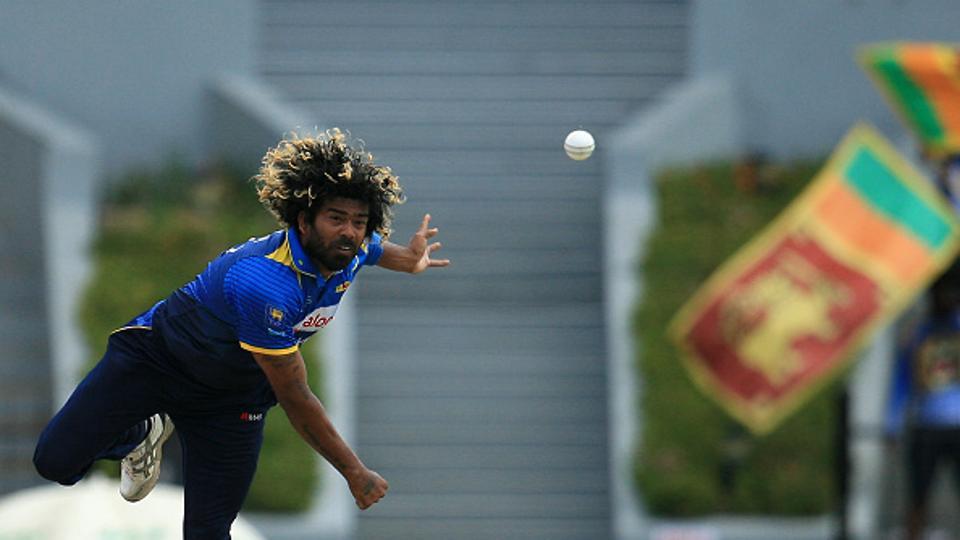
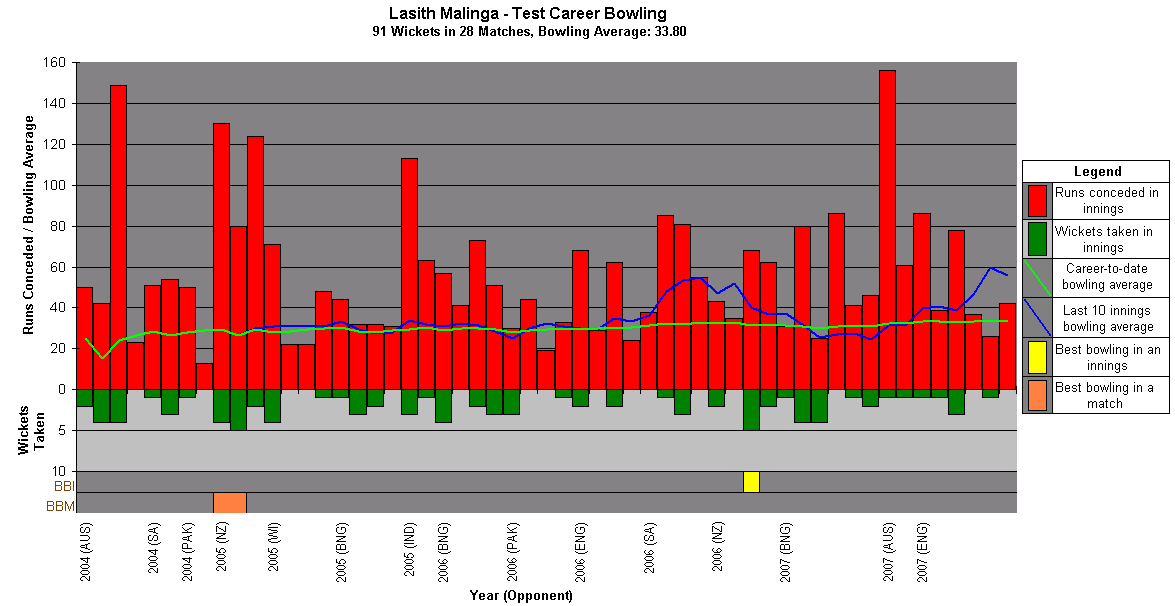
Bidding adieu to Slinger-Malinga

Lasith Malinga has been associated with the imagery of bleached yellow curly hair, pierced eyebrows, tattoos, and deadly yorkers. No-one can forget the kiss before before ball, the freaky sling as he bowls or even the smile after being hit for a boundary. The 145 km/hr toe-crushing yorkers he bowled to the likes of Pollock and Dhoni will be cherished by cricket fans for a long time. 

Malinga was one of those kids who grew up playing cricket in the beaches of  Rathgama, a coastal village situated 12 km northwest of Galle.

Malinga was lucky enough to meet one of the already famous hyper-local kid, who was a former Sri Lankan pacer, Champaka Ramanayake. Ramanayake like any other cricketer was popular with the tennis ball on the beaches. He recognised Malinga’s talent and amused by the unconventional bowling action, where the ball is almost released parallel to the surface.

This unique bowling style would require more practise and Ramanayake would glue a pair of boots to the crease and Malinga would spend hours hitting them, hence perfecting his famed yorker. (This daily activity during his training days probably made him bowl those deadly toe crushing yorkers in International cricket!)

His raw talent wouldn’t be hidden for long, creating ripples in the domestic circuit leading to him getting fast-tracked into national reckoning. He made his Test debut in Australia in 2004, where his skiddy pace saw him among the wickets and his well-directed bouncers troubled the batsmen. He ended up taking six crucial wickets in that match.

He did a remarkable job in 2006/07 tour of New Zealand where dismantled the New Zealand top order and helped Sri Lanka to draw the match. But Malinga’s true calling wasn’t Test cricket. It was the shorter format of the game. He decided to retire from Test cricket on April 22, 2011 on the grounds of injury. He also wanted to pay more attention to the ODIs and T20Is.

Let’s look at some of his records first:

  • Only bowler in cricketing history to take four wickets in four consecutive balls in international cricket (v. South Africa March 2007).
  • The first and, to date, only bowler in cricketing history to take three hat-tricks in One-Day International cricket, taking his third in August 2011.
  • Lasith Malinga and Angelo Mathews hold the highest run partnership for the 9th wicket in an ODI: 132 runs, against Australia in Melbourne in 2010. Malinga scored 56 Runs from 48 balls including six fours and two sixes; Mathews scored 77 runs off 84 deliveries including eight fours and one six.
  • His 56 is the fourth highest ODI score by a number 10 batsman in ODI history and he has the record for the highest ODI score for Sri Lanka when batting at number 10 position (56). He is also the only Sri Lankan to score a fifty in no 10 position in an ODI.
  • He is the only bowler with two World Cup hat-tricks, against South Africa in the 2007 Cricket World Cup and the other against Kenya in the 2011 Cricket World Cup.
  • Best Twenty20 figures in Australian domestic and 2nd in the world.
  • As of April 2017, Malinga is the second highest wicket-taker in all Twenty20 matches with 317 wickets in 232 games.
  • Malinga holds the highest number of wickets (170) in the Indian Premier League.
  • As of 19 January 2017, Malinga holds the best figures in BBL history with 6/7.
  • Fourth Sri Lankan to achieve 300 ODI wickets, after Muralitharan, Vaas and Jayasuriya. He is the fifth quickest bowler to reach the landmark (203 matches).
  • Quickest to achieve 50 ODI wickets in World Cups (26 innings).
  • Third highest wicket taker in World Cup history (56 wickets).

The 2014 T20I World Cup saw a different avatar of Malinga. After the Sri Lankan management decided to drop Dinesh Chandimal, they made Lasith Malinga as the captain of the team. The Sri Lankan team found a leader in him. Bowling yorkers at the death to stifle the Indian batting order, he ensured that the trophy finally came home – leading Sri Lanka to one of its finest moments on the cricketing field. It made him only the second captain of his country after Arjuna Ranatunga to lift an ICC World Cup. But his captaincy was also short-lived as he was constantly in and out of the team due to his injuries.

Malinga has a history of injuries and numerous surgeries, which meant numerous comebacks. Despite losing pace and fizz in his bowling towards the latter stages of his career, he’s still one of the deadly bowlers in the limited over cricket. Malinga decided to retire from the ODIs after 2019 cricket World Cup.

The lost Pathan brothers of Indian Cricket

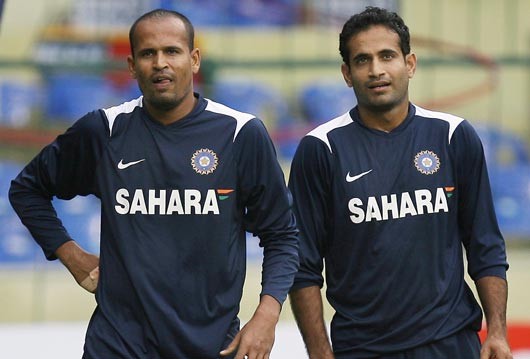
Every Indian growing up watching cricket in the 2007-08 era will remember this duo and their romantic story with the game of cricket. The two brothers, Irfan and Yusuf from Vadodara representing India, one smashing sixes and the other hitting wickets is a story that will remain etched in the heart lovers forever.

Their path to the game unlike many wasn’t very rosy. Their path was filled with in numerous barriers and obstacles.

Like many other Indian kids in the 90s era, cricket was something that struck their eye from the first go. They would regularly get into trouble for playing in the compound of the mosque and at the end of the day, their father had to apologise to the visitors of the holy place.

Ahmed Mia, their maternal uncle introduced them to their first proper coach in Mehndi Sheikh and gave them their first bats. It was there that Irfan met the former India captain Datta Gaekwad and he helped him shaping his career.

Irfan got his first breakthrough in the domestic circuit for Baroda in 2000-01 season when Zaheer khan on an International tour. His promising performances and prodigious swing led him to call up to the Indian test side in 2003. His performance was praiseworthy and people started comparing him with the likes of Wasim Akram.

Yusuf Pathan on the other hand had to wait much longer than his brother, He made his International debut in 2007 in the T20I world cup against Pakistan. Due to Virender Sehwag’s injury, Yusuf opened the batting and scored 15 runs. Yusuf showed his explosive qualities to the world and Irfan emerged as the man of the match.

However, things weren’t as good as it seems. Yusuf and Irfan were at peak of their career at different point of their life. While Irfan drifted off with pace and focused on his batting, Yusuf was opted out of the team because of a string of low scores.

Dr. Shashi Tharoor, MP from Thiruvananthapuram wrote in an article about Irfan Pathan, “Of contemporary cricketers, at least two seem in danger of adding their names to this tragically distinguished list. No one who saw Irfan Pathan swinging India to victory in the one-day series in Pakistan in 2003-04, or taking a hat-trick against the same team two years later, or scoring a century against them the year after that, or winning the Man of the Match in a Test in Australiaand in the final of the inaugural World Twenty20 tournament in South Africa, would imagine that he could be washed up at 25. And yet he is deemed to have lost his mojo to the point where he is not even in the frame for selection for the 2011 World Cup. “

Welcome to ‘What The Duck!’

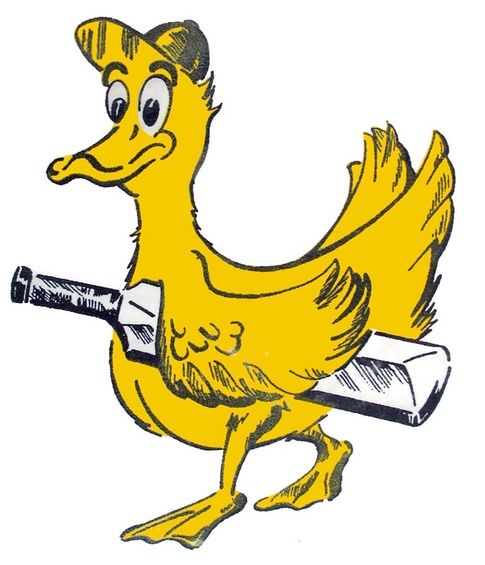
It’s never a great day for the batsmen when he gets out for a golden or a diamond duck! But what is a ‘duck’?

‘Duck’ in cricket refers to the situation when the batsman gets out without scoring any runs!

So why is Zero referred to as ‘Duck’ in cricket?

The term ‘Duck’ originates from the ‘Duck’s egg’. The egg has the shape of ‘0’ and hence a nought is commonly called ‘Duck’. 

There is an interesting piece of history related to the discovery of this amusing little term. On July 17, 1866, when the Prince of Wales got out for a blob, a newspaper carried out a piece stating that “the prince had retired to the royal pavilion on a duck’s egg”. Since then, the duck has forged a successful relationship with the great game of cricket.

Design a site like this with WordPress.com
Get started